Book Designer AI

Designs · Sixteen Directions, Nine Trim Sizes

Sixteen designs. Nine trim sizes. One of them is your book.

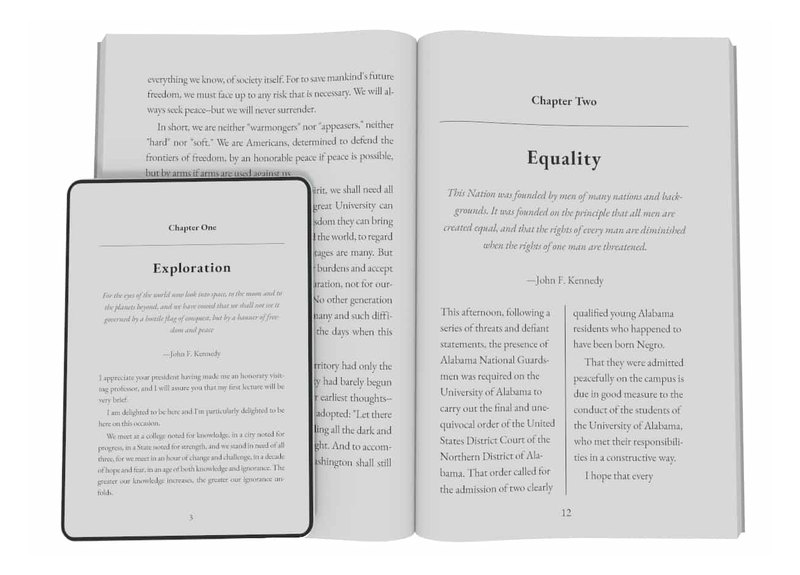
Each design is a book designer’s direction: the typography, the chapter openings, the running heads, the ornaments, the way a page breathes. Cantos follows that direction while it sets your manuscript, page by page. Pick your trim, pick your design, and see your whole book in it free.

See My Book Free

Every design is built for all nine trim sizes. You can change your mind after the book is built.

Your book is never used to train AI. Ever.

The same book, three designs
A 90,000-word manuscript at 6x9 Minimalist — 335 words a page → about 303 pages Pulp — 275 words a page → about 368 pages Magnificent (large print) — 198 words a page → about 508 pages

Measured, not guessed: every design was rendered at every trim size to get its real words a page. That is 205 pages between the tightest and the most generous, on the same manuscript, and pages are what a printer charges you for.

70,000+ Authors Served · 15 Years of Publishing Craft · 300,000+ Books Published

From the team behind BookDesignTemplates.com, trusted by first-time authors since 2011. Real people who have designed books for fifteen years, now working for you.

The Sixteen

Every design, and the book it was made for.

Thriller, fantasy, science fiction, historical, business, memoir, self-help, literary, and large print for accessibility. The words-a-page figure under each one is measured at 6x9; every design has its own figure at each of the nine sizes.

Atlanta interior design preview
AtlantaFiction · Non-fiction · Literary263 words a page at 6x9
Brisk interior design preview
BriskFiction · Non-fiction335 words a page at 6x9
Elite interior design preview
EliteNon-fiction · Business · Self-help · Literary242 words a page at 6x9
Indie interior design preview
IndieFiction · Non-fiction256 words a page at 6x9
Lightning interior design preview
LightningFiction · Non-fiction225 words a page at 6x9
Minimalist interior design preview
MinimalistFiction335 words a page at 6x9
Pulp interior design preview
PulpFiction · Literary275 words a page at 6x9
Spark interior design preview
SparkFiction · Literary · Non-fiction256 words a page at 6x9
Noir interior design preview
NoirFiction · Thriller205 words a page at 6x9
Magnificent interior design preview
MagnificentFiction · Non-fiction · Large print198 words a page at 6x9
Bard interior design preview
BardFiction · Fantasy207 words a page at 6x9
Asimov interior design preview
AsimovFiction · Science fiction230 words a page at 6x9
Historian interior design preview
HistorianFiction · History252 words a page at 6x9
Leadership interior design preview
LeadershipNon-fiction · Business256 words a page at 6x9
Nin interior design preview
NinNon-fiction · Literary212 words a page at 6x9
Inspire interior design preview
InspireNon-fiction · Self-help202 words a page at 6x9

Nine Trim Sizes

Every design, at every size.

Margins, gutter, running heads and folios are set for the size you choose, not scaled down from another one. The binding gutter is calculated from your book’s real page count, so a thick book does not swallow its own inside margin.

The sizes

  • 5x8, 5.25x8, 5.5x8.5 — the familiar novel sizes
  • 6x9 — the standard for non-fiction, memoir and trade paperbacks
  • 7x10, 8.5x11 — manuals, workbooks and large-format non-fiction, and the comfortable homes for large print
  • 8.5x8.5 — the square format
  • A4, A5 — the European equivalents

Why we ask for the trim first

  • The same manuscript is a different book at 5x8 and at 8.5x11: different page count, different price to print, different feel in a hand
  • So the picker asks for the size before the design, then shows you what each design does at that size
  • Page count is money. Every extra page is charged on every copy you ever sell
  • Nothing here is locked. Change the size, change the design, see it again

The Number Nobody Else Shows You

How long your book will be, before you build it.

Every design was rendered at every trim size with its real type, and the words a page were counted off the result. So at the picker, each design carries its own measured density, an “about N pages” figure for your manuscript at your trim size, and a plain word for how it reads.

Dense · Average · RoomyHow the page reads

Each design is compared against the middle of the pack at that trim size, so the label is honest about that size rather than borrowed from another one. Dense fits more on a page; roomy gives the reader more air.

Ink SaverThe five tightest at your size

The five densest designs at the trim you picked carry the badge. They are the ones that will hand you the shortest book, and the cheapest per copy, without looking cramped.

About N pagesYour manuscript, not an average

Your word count against that design’s measured density, plus an allowance for the front and back matter, and padded upward on purpose so a print budget built on it is safe. The exact number comes from the finished book, which you see free.

Accessibility

Magnificent, the large-print design.

Large print is not a niche; it is the difference between a reader finishing your book and putting it down. Magnificent sets your book in clear 14 point type, for readers with low vision and for anyone whose eyes are tired by the end of the day, and it does it for fiction and non-fiction alike. It pairs with the 7x10 and 8.5x11 trims, which is where large type belongs: on a small page it balloons the page count and the print cost, and we would rather say so than sell you a 700-page paperback. Large-print trim sizes are available on every design, not only this one.

Before It Builds

Four questions, and only the ones your book raises.

Once the design is picked, Cantos asks about the decisions that are genuinely yours. Never more than four, never one your manuscript did not raise, and every one already has a sensible answer selected: one click on Use Cantos’ recommendations takes them all.

What it asks

  • A contents page: yes or no? Asked only when the book reads as a novel and you did not write a contents list yourself. Most novels print none
  • Acknowledgements: front or back? Asked only when you wrote them before chapter one
  • Where should each chapter start? Right-hand page always is the traditional print look; either page costs fewer blank pages
  • The order of your closing pages, shown only when there are two or more sections after the last chapter

How it behaves

  • Nobody has to have an opinion. One button takes every recommendation
  • Asked once per book. A refresh, a dropped connection or a return the next day comes back past the card
  • Nothing is permanent. Every one of the four can be changed afterwards on Revise, in plain words
  • Your finished book tells you what you chose, with the reminder that it can be changed

The Price

The design is not the product. Your book is.

Interior $99.99

One book, any of the sixteen designs, any of the nine trim sizes, as many looks as you want to try before you decide. Interior and cover together, $149.99; interior, cover, copy editing and the marketing kit, $249.99.

You see it before you buy it. Cantos builds the whole book free, in the design you picked, and shows you a watermarked, full-resolution proof copy of the finished thing. Payment releases the clean files. No card up front, no trial to cancel.

Refunds: a flat 50% within 14 days, self-service, on every purchase; a full refund withholds the files it paid for. The whole policy is in our Terms.

Being Straight With You

What this is not.

By designNot a template you fill in

Nothing is poured into a fixed shape. The design is direction, and Cantos makes the page-by-page decisions your particular book needs. If you would rather do that work yourself in Word, our sister store BookDesignTemplates.com sells the hand-drawn templates for exactly that, and it is a good answer to a different question.

By designNot a font menu

You are not choosing a typeface, a leading and a margin one control at a time. Each design is a complete typographic system that was made to hold together, which is why the books look designed rather than assembled. Try a different one as often as you like.

Not a fitNot page-by-page art direction

These are designs for books made of words: prose, chapters, headings, tables, figures. A cookbook, a children’s picture book or a heavily illustrated reference book needs a designer laying out every spread, and we will tell you that rather than sell you something that will disappoint you.

One App, The Whole Book

And everything around the design.

The design decides how your pages look. The rest of the book is here too, in the same project, and none of it needs a second account.

Why We Built This

A note from Tracy Atkins, founder

I have been designing book interiors for fifteen years, and selling the templates for them to authors who wanted to do it themselves. Those designs are where these sixteen came from. They are not decoration. A chapter opening, a running head and the space around a paragraph are how a reader knows, before the first sentence, that the book in their hands was made with care.

What authors were never given was the consequence. Nobody tells you that choosing one design over another can mean two hundred pages of difference on the same manuscript, and that every one of those pages is charged to you on every copy you sell. So we measured all of it, at every size, and put the number on the card you are choosing from.

And Magnificent is here because accessibility is not a checkbox to us. A reader with low vision should get your book, set properly, in a size they can read.

Tracy Atkins, founder

Before You Start

The questions authors ask.

Can I see my own book in a design before I pay anything?

Yes, and that is the point. Cantos builds your whole book in the design you pick and shows you a watermarked, full-resolution proof copy of the finished thing. You read your own pages in your own design before any money moves. Payment releases the clean files.

Do all sixteen designs come in all nine trim sizes?

Yes. Every design is built for 5x8, 5.25x8, 5.5x8.5, 6x9, 7x10, 8.5x8.5, 8.5x11, A4 and A5, and the margins, gutter and running heads are set for that size rather than scaled from another one.

Can I change the design after the book is built?

Yes. Ask Cantos on Revise, in plain words, and the book is set again in the new design; your text, your corrections and your images come with it. Each item in your project includes three revisions, and after release further revisions are priced individually.

Which design should I pick?

Start with your genre: the grid above names what each design was made for. Then look at the words a page. If page count matters to you, a denser design saves real money on every copy printed. If you want the book to feel unhurried, a roomier one is worth the pages. There is no wrong answer you cannot change later.

What is Magnificent?

Our large-print design: clear 14 point type set for readers with low vision, and for anyone whose eyes are tired at the end of the day. It works for fiction and non-fiction alike. Pair it with the 7x10 or 8.5x11 trim, because large type on a small page balloons the page count and the print cost.

How accurate is the page estimate?

It is measured, not guessed: every design was rendered at every trim size with its real type to get its words a page, and your estimate is deliberately padded upward so a print budget built on it is safe. The exact count comes from the finished book, and you see that before you pay.

Which trim size should I choose?

6x9 is the standard for non-fiction, memoir and trade paperbacks. 5x8, 5.25x8 and 5.5x8.5 are the familiar novel sizes. 7x10 and 8.5x11 suit manuals and large-format non-fiction, and they are the sizes that carry large print comfortably. A4 and A5 are the European equivalents.

Is this a template pack?

No. Nothing is poured into a fixed template; Cantos sets your book page by page, following the design the way a typesetter follows a designer's direction. If you would rather do the typesetting yourself in Word, our sister store BookDesignTemplates.com sells the hand-drawn templates for that, and it is a perfectly good answer to a different question.

See your book in any of them.

Cantos builds the whole thing free, in the design and the size you choose, and shows it to you before anything is paid.

See My Book Free

No card up front. Never used to train AI.

See My Book Free